What is Asphalt?
What is Asphalt?
Asphalt is a natural substance that has some amazing physical properties. It’s sticky and elastic and able to stretch, bend and flex without breaking. At air temperatures, asphalt cement is a very thick liquid. When heated, it becomes thinner and easier to use. Asphalt has been used since before Roman times as a glue and for water-proofing. In a few places in the world, it’s naturally occurring, such as in a lake on the island of Trinidad and in the LaBrea “tar pits” in downtown Los Angeles. Almost all of the asphalt used today for paving comes from petroleum crude oil. Liquid asphalt is the heaviest part of the crude, what is left over, after all of the the volatile, light fractions are distilled off for products such as gasoline. In Europe and Canada, it is commonly called bitumen.
Asphalt is supplied in several different grades. Softer asphalts are used in colder temperatures and harder asphalts in hotter climates. The US government sponsored a multi-million dollar research project (Strategic Highway Research Program, SHRP) in the 1990’s which developed new standards for asphalt binders called performance grade (PG) binders. Premium grades usually have polymers or other modifiers for use in heavy duty applications such as intersections on city streets or airports or in extreme climates.
Like any good recipe, the ingredients should be high quality, they should be carefully measured, and they should be cooked at exactly the right temperatures. At the asphalt plant, the aggregates are precisely blended and then dried and heated to the right temperature. The mixture is then completely coated with liquid asphalt cement. There are two types of asphalt plants, batch and drum. Drum mix plants dry the aggregate and blend it with asphalt in a continuous process in the same piece of equipment. With batch plants, the rocks are first dried and heated, then added to the pugmill and blended with the asphalt one batch at a time.
Transporting and Placing Asphalt Mixtures
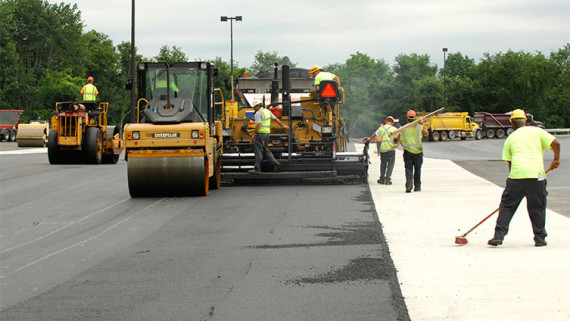
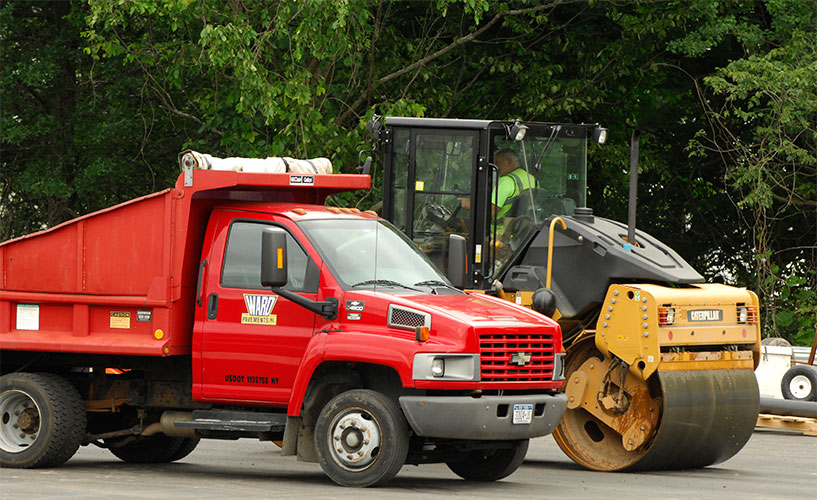
Once mixed, the asphalt is loaded into trucks and transported to our job sites. The asphalt is then placed on your asphalt paving project using a paver. Once the paver lays the asphalt mix, it is compacted with rollers until it has just the right number of air voids. Temperature is a very important factor. The best temperatures for mixing, transporting, laying and compacting asphalt is based on how stiff/viscous the asphalt is, how far and long it must be transported, and when it will be compacted. If it is compacted too hot, the air voids will be too low. If it is too cold, it will be difficult to compact and the air voids will be too high.
From http://www.myasphaltpavingproject.com/